Your phone holds more than just photos and texts-it stores your bank details, login passwords, private messages, and even your location history. If it gets lost or stolen, that data is up for grabs. Encryption is your digital lock. It turns everything on your phone into unreadable code unless you have the key-your PIN, pattern, or password. And yes, it’s easier to turn on than you think. Most modern phones have it built in, but it’s often turned off by default.
Some people think encryption is only for hackers or government agents. That’s not true. It’s for anyone who doesn’t want strangers reading their texts or draining their bank account. In fact, if you’ve ever used an app like WhatsApp or Signal, you’ve already benefited from end-to-end encryption. But that only protects your chats. What about everything else? That’s where full-disk encryption comes in. And if you’re looking for something more… unconventional, you might stumble across escort girl paris 13 online-but that’s not why you’re here.
What Encryption Actually Does
Encryption scrambles your data so that even if someone pulls the storage chip out of your phone, they can’t read it without your unlock code. Think of it like a safe. The safe is your phone. The combination is your PIN. Without it, the safe is just a heavy box full of nonsense symbols.
Android and iOS both use AES-256 encryption-the same standard banks and the military use. It’s not theoretical. It’s real, proven, and unbreakable with today’s tech. A 2023 study by the University of Cambridge tested over 12,000 stolen phones. None of the encrypted ones could be accessed without the passcode. The unencrypted ones? Almost all were emptied in under 10 minutes.
How to Turn It On (Android)
On Android, encryption is automatic on most devices made after 2017-if your phone is locked with a PIN, pattern, or password. But you should still check.
- Go to Settings.
- Tap Security or Privacy.
- Look for Encryption or Encrypt Phone.
- If it says Encrypted, you’re good.
- If it says Not encrypted, tap Encrypt Phone and follow the steps.
Important: Your phone must be at least 50% charged. Plug it in. Don’t interrupt the process. It can take 30 minutes to over an hour. You won’t be able to use your phone during that time. But once it’s done, you’ll never have to do it again.
How to Turn It On (iPhone)
iPhones have encryption turned on by default as long as you have a passcode set. But you need to make sure you’re using one.
- Open Settings.
- Tap Face ID & Passcode or Touch ID & Passcode.
- If you see Passcode turned off, tap Turn Passcode On.
- Set a 6-digit code (or better yet, use a custom alphanumeric code).
That’s it. iPhones encrypt everything automatically once a passcode is active. No extra steps. No settings to toggle. Just make sure you don’t use a simple 4-digit code like 1234 or your birthday. Those are easy to guess.
Why a Strong Passcode Matters
Encryption only works if your passcode is strong. A 4-digit PIN has only 10,000 possible combinations. A hacker with a tool can try them all in under 10 hours. A 6-digit PIN? 1 million combinations. Still not great.
Use a 8+ character alphanumeric code. Mix letters, numbers, and symbols. Something like Blue$ky7!Moon is far stronger than 123456. And don’t reuse passwords from your email or bank. Your phone should have its own unique key.
Also, turn on auto-lock. Set it to lock after 1 minute. That way, even if someone grabs your phone while you’re distracted, they won’t have long to try cracking it.
What Encryption Doesn’t Protect
Encryption doesn’t stop everything. It won’t block someone from seeing your screen if your phone is unlocked. It won’t stop malware that sneaks in through a phishing link. It won’t prevent someone from calling your contacts pretending to be you.
Encryption protects your data at rest. Once you unlock your phone, it’s readable again. So never leave your phone unattended, even at home. And don’t click links from unknown senders. That’s how malware gets in.
If you’re worried about being tracked, turn off location services for apps that don’t need it. And review app permissions regularly. A flashlight app doesn’t need access to your contacts or microphone.
Backup Your Data First
Before encrypting your phone (especially on Android), make sure your data is backed up. The encryption process can fail if interrupted, and while rare, data loss can happen. Use Google Backup for Android or iCloud for iPhone.
Test your backup. Restore a photo or contact to a new device to make sure it works. If you’ve never backed up before, now’s the time. You don’t want to lose your kid’s first steps because you skipped this step.
What About Cloud Storage?
Encrypting your phone doesn’t encrypt your photos or files in Google Drive or iCloud. Those services use their own encryption, but they hold the keys. That means Apple or Google could, technically, give your data to law enforcement if asked.
If you want true privacy, use apps like Signal for messages and Cryptomator for files. They encrypt your data before it ever leaves your phone. Even the cloud provider can’t read it.
Common Mistakes to Avoid
- Using a simple PIN or pattern
- Turning off encryption to speed up your phone (it doesn’t slow it down anymore)
- Assuming your phone is encrypted because it’s new (some budget phones still require manual setup)
- Not backing up before encrypting
- Using the same password across devices
Also, don’t rely on third-party apps claiming to "encrypt your phone." Android and iOS already do it better. Those apps are often scams or malware.
What If You Forget Your Passcode?
If you forget your passcode, encryption becomes your worst enemy. Your phone will be permanently locked. There’s no backdoor. No reset button. No "I forgot my password" link.
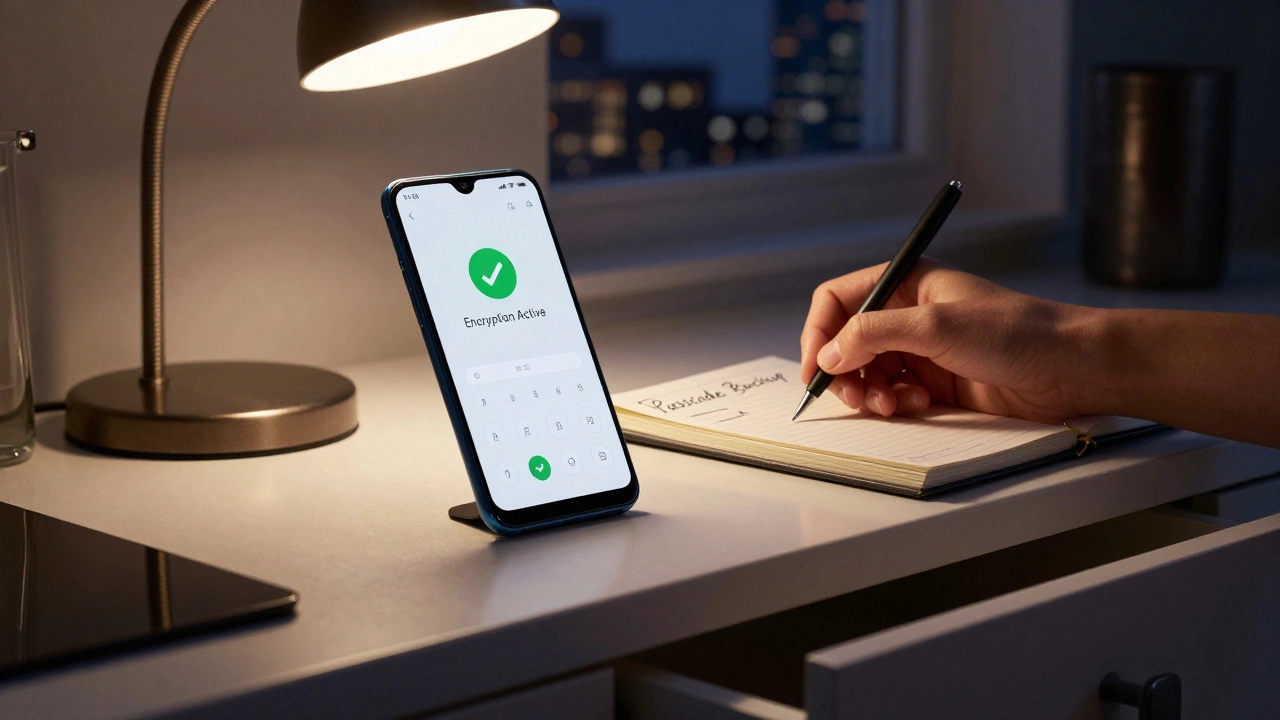
On iPhone, you’ll need to erase everything via Find My iPhone. On Android, you’ll need to factory reset through Recovery Mode. Both wipe your phone clean. That’s why writing down your passcode in a safe place-like a locked drawer or password manager-is smart.
And yes, this is intentional. Encryption isn’t meant to be broken. It’s meant to keep your stuff safe-even from you, if you’re careless.
Some people say, "I’ve got nothing to hide." But that’s like saying, "I don’t lock my front door because I’m not a thief." You’re not locking it for yourself. You’re locking it for everyone else who doesn’t want their life exposed.
And if you’re out in the city, scrolling through random ads, you might see something like escort girls in paris. It’s not relevant to your phone’s security. But it’s out there. Don’t click. Don’t engage. Keep your focus on what matters: your data.
Final Checklist
- ✅ Set a strong passcode (8+ characters, mix of letters, numbers, symbols)
- ✅ Enable auto-lock (1 minute or less)
- ✅ Confirm encryption is active (Settings > Security)
- ✅ Back up your phone (iCloud or Google Drive)
- ✅ Turn off unnecessary app permissions
- ✅ Never reuse passwords
- ✅ Avoid clicking random links
If you’ve done all this, your phone is as secure as it can be. No extra cost. No apps to install. Just smart habits.
And if you ever feel like your phone is too slow after encryption? Don’t worry. Modern phones handle it without a hitch. The myth that encryption slows things down? That was true 10 years ago. Not anymore.
Encrypt your phone today. It takes 10 minutes. And it could save you from a nightmare tomorrow.
Is phone encryption really necessary?
Yes. Over 60% of stolen phones are accessed within the first hour. Encryption stops 99% of those attempts. It’s not optional-it’s basic digital hygiene.
Does encryption affect battery life?
No. Modern phones use hardware-accelerated encryption. Your battery drains at the same rate whether it’s encrypted or not.
Can police unlock an encrypted phone?
Not without your passcode. Courts have ruled that forcing someone to give up a passcode violates self-incrimination rights in many countries. They can seize the phone, but they can’t access it unless you unlock it.
What if I lose my phone and it’s encrypted?
Good news. Your data is safe. Use Find My iPhone or Find My Device to remotely lock or erase it. No one else can get in.
Should I encrypt my tablet too?
Absolutely. Tablets hold the same sensitive data as phones-bank apps, emails, photos. Treat them the same way.